
The Franciscan complex of Santo Antônio and the Church of São Francisco
Article 27 of 100 · September 10, 2026 · 1 min read · Destino João Pessoa
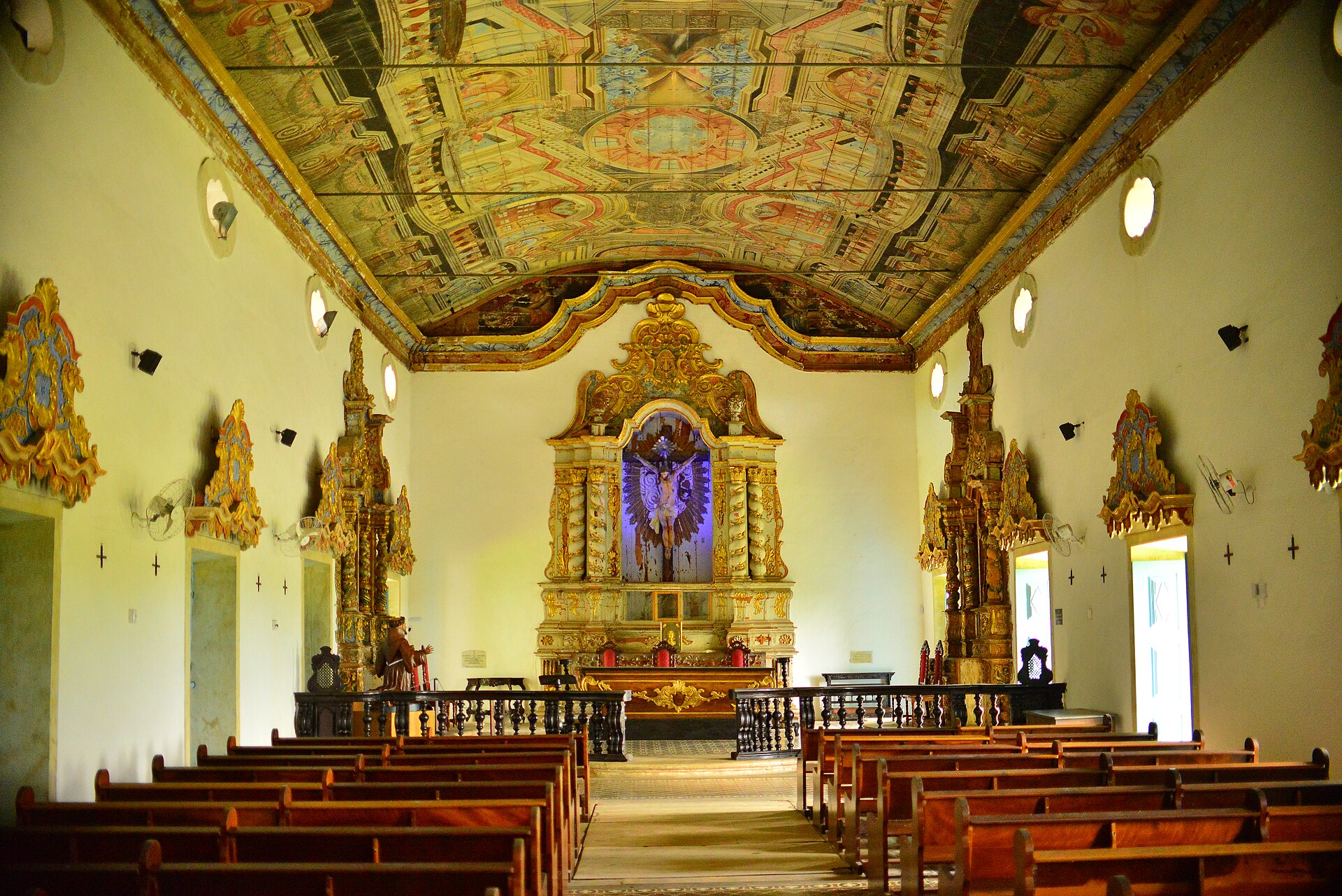
Built starting in 1588 by the Franciscans, the Santo Antônio complex is considered one of the most important religious monuments in the Northeast.
The Franciscan presence in João Pessoa began in 1588, with the arrival of Friar Melchior de Santa Catarina to found the convent. The essential works, following the original project of Friar Francisco dos Santos, were completed in 1591, but construction was halted in 1599 due to conflicts with the governor of the captaincy at the time. Over the following centuries, the complex suffered damage during the Dutch occupation — the friars were even expelled in 1636 — and was restored after the Portuguese reconquest in 1661. The works that gave the convent its current features began in the early 18th century, and the church's façade was only completed in 1779.
The complex brings together the convent, church and cloister of the Third Order of São Francisco, in a style that combines Baroque elements with indigenous influences — the so-called "Franciscan school" of construction. Highlights include the superposition of vaults, panels of Portuguese tiles and a courtyard with a Moorish design. The church's pulpit is cited as a standout piece in the complex, and stone masks on the staircase are linked by researchers to possible American indigenous influences.
The federal heritage listing of the complex was registered on October 16, 1952, in the Book of Fine Arts Heritage, under IPHAN process no. 63-T-1938. Part of the complex currently operates as the Sacred Art Museum-School of Paraíba, bringing together pieces of religious art that document centuries of the Church's history in the region.
For visitors, the Franciscan complex of Santo Antônio remains one of the most complete places to understand colonial religious architecture in Paraíba, alongside the other churches of the Historic Center.